

Understanding the Redox Dance: NAD+ vs. NADH Explained
As a Business Attorney and Biohacker, I’ve spent years analyzing the intricate mechanics that drive success in both business and biological systems. While my typical domain spans law, tax, AI, and corporate strategy, a fundamental principle underpins all high-performing systems: efficient energy management.
This principle is nowhere more evident than in the molecular machinery of our own bodies, specifically in the critical interplay between NAD+ and NADH. Understanding this cellular “redox dance” is crucial for anyone looking to optimize performance, longevity, and overall well-being. NAD+ (nicotinamide adenine dinucleotide) and NADH are two forms of the same vital coenzyme that act as electron carriers, orchestrating cellular energy production, DNA repair, and overall metabolic health in every cell of your body. Their continuous conversion is the lifeblood of cellular function and is profoundly impacted by age and lifestyle.
In this article, I want to share some of the research around NAD+ and various associated concepts to save you a ton of time and energy in your own research. This is NOT medical advice – just research to help you understand the world of NAD+ and whether it is something for you to consider.
The Core Concepts: NAD+ and NADH – The Cell’s Energy Shuttles
At the heart of cellular life is a continuous exchange of energy, and NAD (Nicotinamide Adenine Dinucleotide) is an indispensable molecule facilitating this process. Discovered in 1906, NAD is a coenzyme present in every living cell, playing a pivotal role in transferring electrons during various metabolic reactions. Essentially, NAD exists in two primary states: its oxidized form, NAD+, and its reduced form, NADH. Think of them as two sides of the same coin, constantly interconverting to maintain the delicate balance required for life.
NAD+: The Electron Acceptor and Cellular Manager
NAD+ is the “empty” or “oxidized” form of the molecule, meaning it’s ready to accept electrons. Its role extends far beyond just electron acceptance; NAD+ acts as a fundamental coenzyme in over 500 metabolic reactions. It’s crucial for catabolic processes, which break down nutrients like glucose and fats to release energy. During key stages of cellular respiration, such as glycolysis and the citric acid (Krebs) cycle, NAD+ readily accepts electrons (and a hydrogen ion), becoming NADH.
Beyond its function in energy generation, NAD+ is a true “cellular manager.” It’s essential for activating sirtuins and PARP enzymes, which are critical for DNA repair, gene expression, and regulating cellular stress responses. A high NAD+ to NADH ratio generally signals a cellular environment conducive to oxidative reactions and efficient energy production.
NADH: The Electron Donor and Energy Carrier
NADH, the “full” or “reduced” form, is NAD+ after it has picked up two electrons and a hydrogen atom. It functions primarily as an “energy carrier,” shuttling these high-energy electrons to the mitochondria. Here, in the electron transport chain, NADH donates its electrons, a crucial step in the process of oxidative phosphorylation that ultimately generates ATP (adenosine triphosphate) – the cell’s main energy currency. This continuous donation of electrons regenerates NAD+, allowing the cycle to repeat billions of times per day in every cell.
While NAD+ is more involved in signaling pathways and cellular repair, NADH’s primary job is energy transfer. It’s also involved in antioxidant defense, helping to shield cells from oxidative damage.
The Critical NAD+/NADH Ratio
The balance between NAD+ and NADH, expressed as the NAD+/NADH ratio, is a profound indicator of a cell’s metabolic health and redox state. Healthy mammalian tissues typically maintain a high cytoplasmic NAD+ to NADH ratio, often cited around 700:1, favoring oxidative reactions and efficient energy metabolism. This ratio is dynamic, shifting based on the cell’s energy demands and stress levels.
A disruption in this ratio, particularly a shift towards a lower NAD+/NADH ratio, can indicate metabolic dysfunction, impaired energy production, oxidative stress, and mitochondrial dysfunction. This imbalance has been linked to a range of health issues, including metabolic disorders, neurodegenerative diseases, and cardiovascular conditions.
The Broader Implications: NAD+/NADH Balance for Performance and Longevity in 2026
As we navigate the complexities of 2026, the scientific community continues to underscore the profound impact of NAD+ and NADH on human health and longevity. The optimized balance of these coenzymes is not merely a biological curiosity; it represents a foundational pillar for peak physical, cognitive, and cellular performance, which, in turn, influences our ability to thrive in a demanding world. From a strategic perspective, understanding and supporting this balance is akin to optimizing the core infrastructure of any high-performing enterprise.
NAD+ Decline and Age-Related Challenges
A significant area of ongoing research, and one with critical implications, is the observation that NAD+ levels naturally decline with age across many human tissues. This decline, which can be as substantial as 10-80% with aging, impairs cellular repair mechanisms and contributes to age-related metabolic dysfunction. While some recent studies, particularly a 2026 Nature Metabolism study, suggest that whole-blood NAD+ levels may not decline predictably with age, other research consistently shows age-related NAD+ decline in specific tissues like skin, brain, skeletal muscle, and liver.
This age-related NAD+ depletion is associated with a cascade of issues: reduced energy levels, impaired cognitive function, diminished overall cellular health, and a higher risk of age-related diseases like Alzheimer’s and Parkinson’s. Researchers from the University of Oslo and Akershus University Hospital, among others, highlighted in a 2026 Nature Aging review that NAD+ is a key molecule for potentially slowing aging and combating neurodegenerative diseases.
Strategies for Supporting NAD+ Levels: Current and Emerging Insights
Given its critical roles, there’s considerable interest in finding ways to maintain or boost NAD+ levels. While no “anti-aging cure” exists, and research is ongoing, several strategies are being explored:
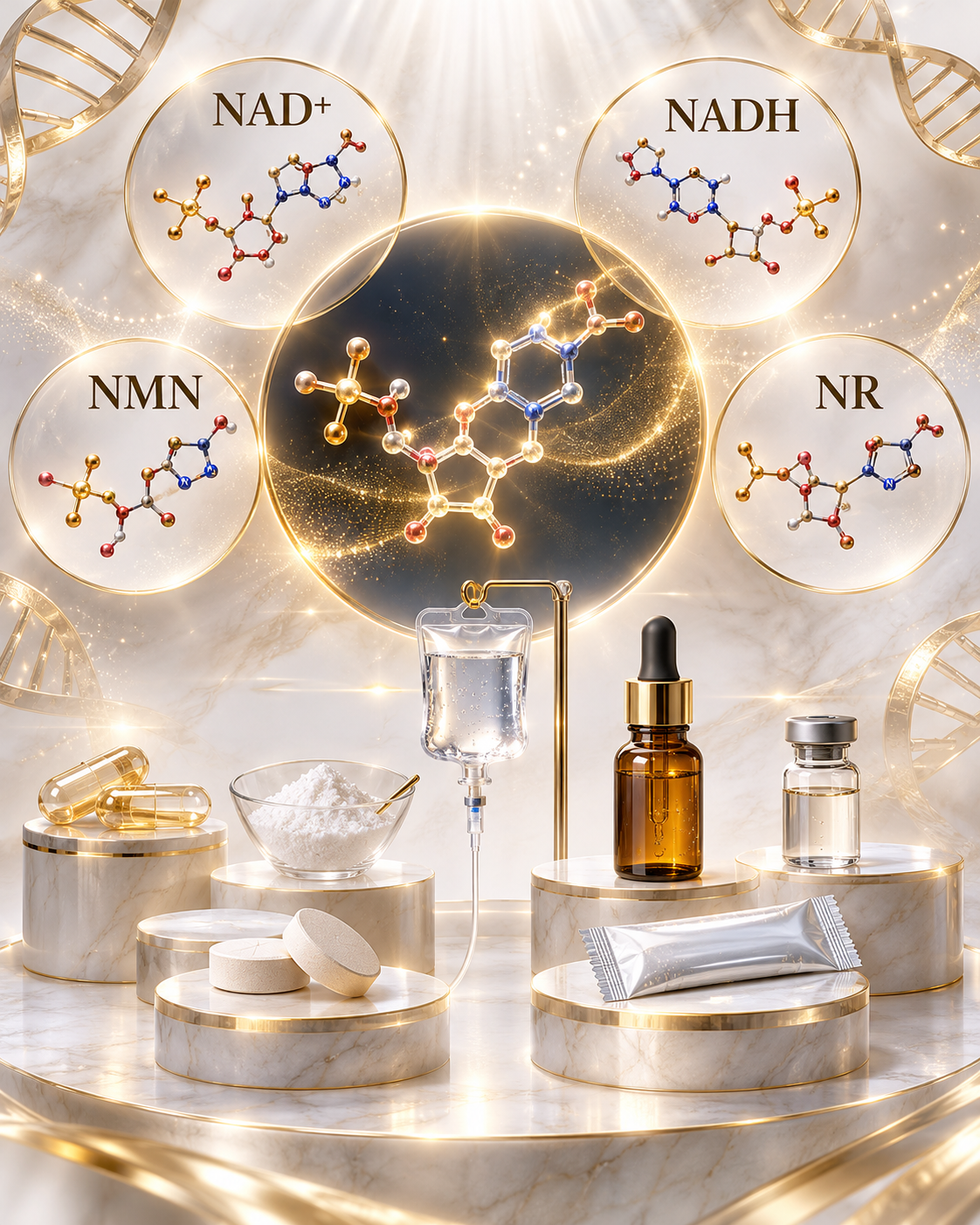
- Precursor Supplementation: The body synthesizes NAD+ from precursors, primarily forms of vitamin B3 (niacin, nicotinamide, nicotinamide riboside (NR), and nicotinamide mononucleotide (NMN)) and the amino acid tryptophan. Recent human trials, such as a January 2026 study published in Nature Metabolism, indicated that NMN and NR significantly doubled circulating NAD+ levels after 14 days of supplementation, whereas nicotinamide did not show the same sustained effect. Interestingly, this study also suggested that gut bacteria convert NMN and NR into nicotinic acid (NA), a potent NAD+ booster. While oral supplements can raise blood NAD+ levels, their efficacy and bioavailability can vary, with injectable or nasal spray forms potentially offering better absorption. However, a 2026 PRISMA-guided systematic review noted that while biological activity of NAD+ precursors is clear, clinical effectiveness for anti-aging in humans remains inconclusive.
- Lifestyle Interventions: Foundational health practices play a significant role. Regular exercise naturally increases NAD+ levels by activating key enzymes. A balanced diet, rich in tryptophan (found in turkey, eggs, seeds) and niacin (in poultry, fish, legumes), provides the building blocks for NAD+ synthesis. Minimizing chronic inflammation and oxidative stress, often achieved through diet and stress management, also helps preserve NAD+ levels, as these stressors can deplete them. Intermittent fasting is another lifestyle change that has been shown to enhance NAD+ production.
- Emerging Therapies: Beyond conventional supplements, the landscape of NAD+ support is evolving. IV therapy and injections are offered in wellness clinics, aiming for more direct and potentially faster increases in NAD+ levels. However, human clinical evidence specifically for injectable NAD+ remains limited, and the FDA’s stance on these products is an important consideration. Future research, as noted in April 2026, aims for precision medicine approaches, identifying individuals most likely to benefit from NAD+ augmentation based on genetics and health status.
In October 2026, Mayo Clinic researchers published findings in Nature Communications indicating that niacin supplementation effectively countered shortened lifespans and reversed aging-like features in NAD+-deficient mice. This research underscores the potential of dietary interventions to impact NAD+ levels and healthspan, even as human studies continue to refine our understanding of age-related NAD+ dynamics.
Ultimately, the intricate relationship between NAD+ and NADH is not just a biological fact but a blueprint for cellular resilience. For individuals seeking to optimize their personal health strategy in 2026, a holistic approach that considers diet, exercise, stress management, and, where appropriate, science-backed supplementation, remains the most prudent course. As an expert in navigating complex systems, I emphasize that understanding these fundamental cellular processes is not just about extending life, but enhancing its quality and our capacity for sustained high performance.
SOURCES:
- clevelandclinic.org
- Ggoldmanlaboratories.com
- Iivconcierge.com
- Ccreative-proteomics.com
- Aaboutnad.com
- Ttlc-medlab.com
- Jjinfiniti.com
- Nnadmed.com
- Aaboutnad.com
- Ggoldmanlaboratories.com
- Aagelessrx.com
- Ppromegaconnections.com
- Ttesting.com
- Ttennantproducts.com
- Mmedium.comVerified
- Rrupahealth.comVerified
- Pprotocolhealthmd.com
- Ssciencedaily.com
- Rrenuebyscience.com
- Aaboutnad.com
- Ppulseandremedy.com
- Nnih.gov
- Ttopdoctormagazine.comVerified Google Search Source
- Nnmn.com
- Ttruniagen.com
- Nnad.com



Leave a Reply