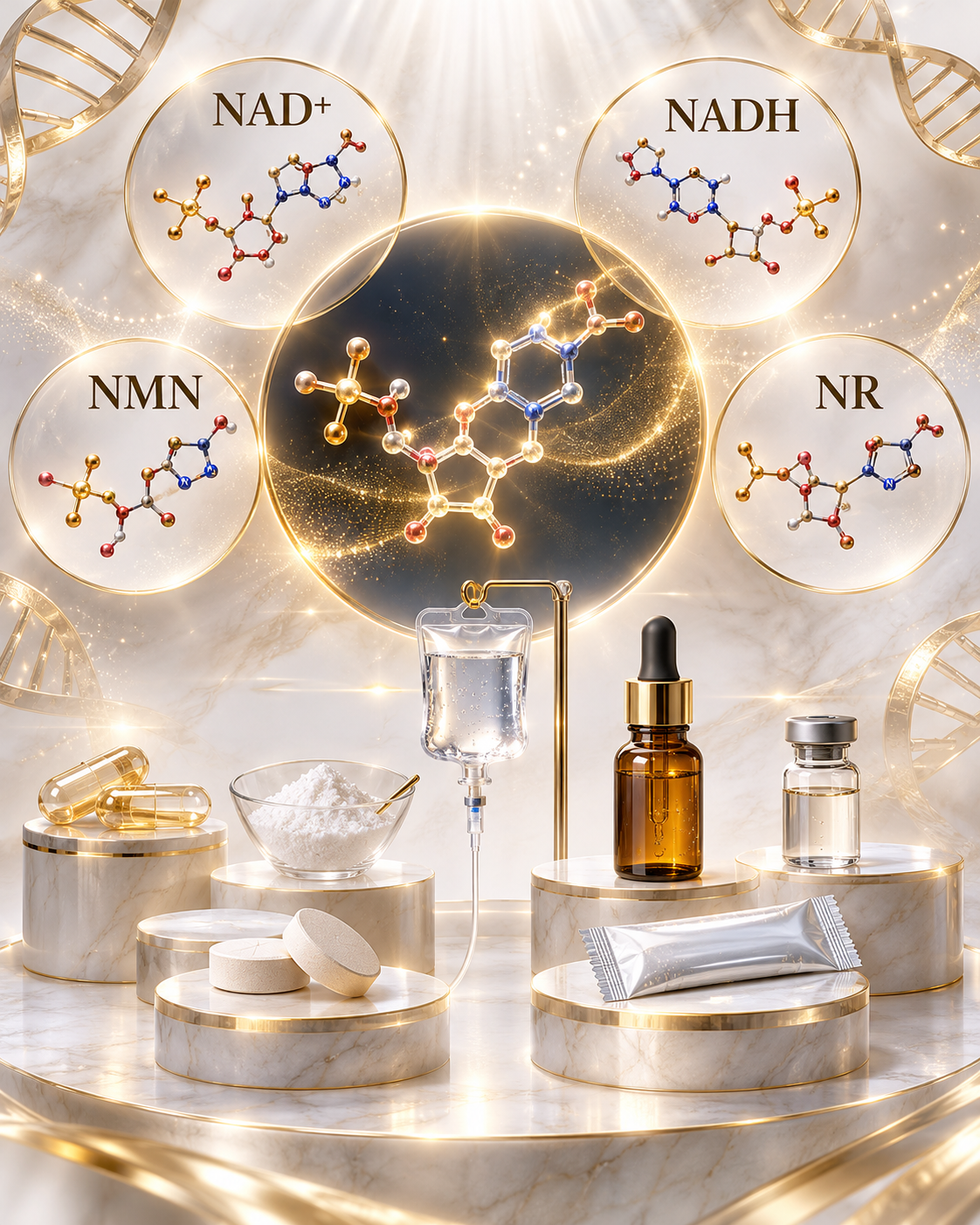

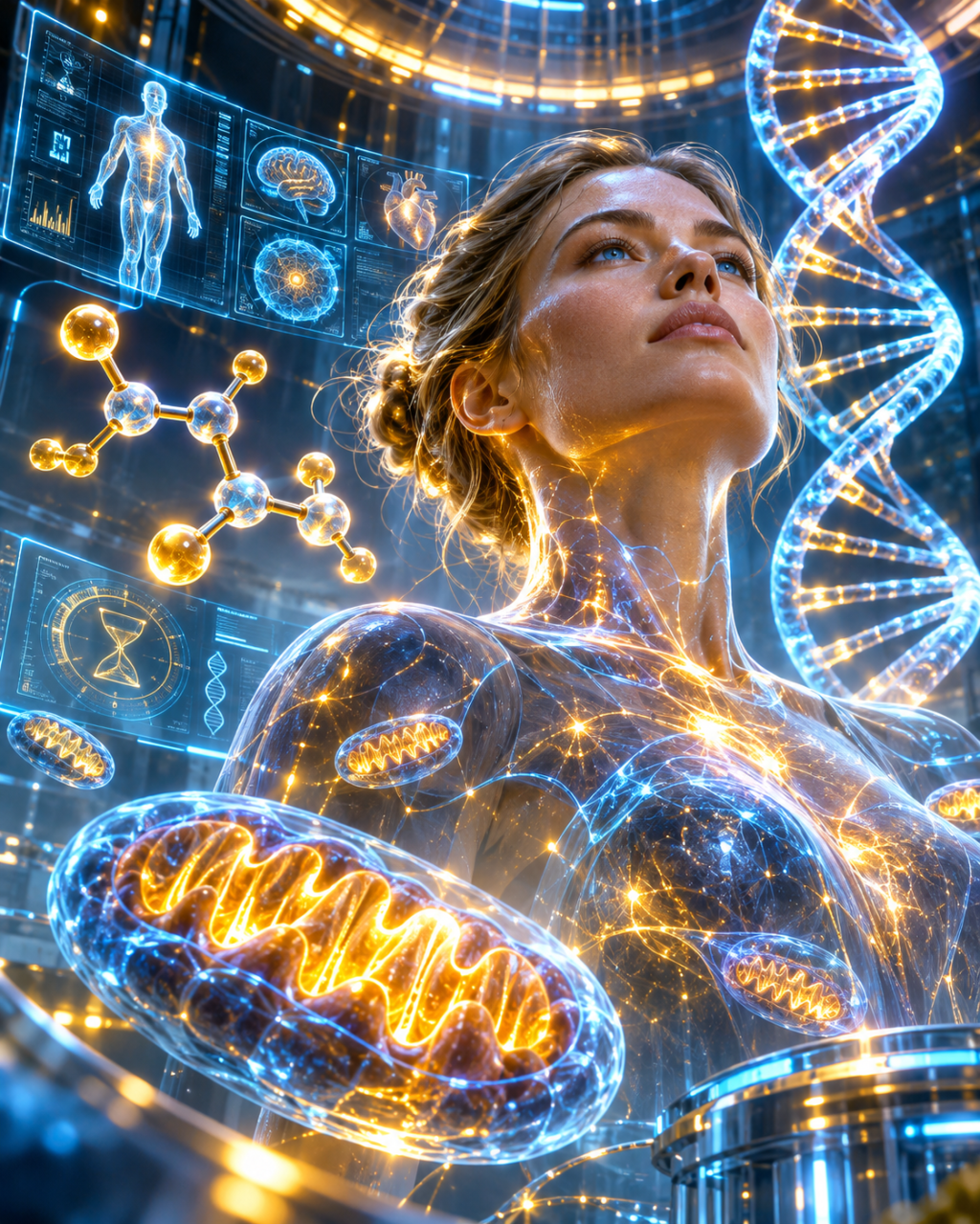
Nicotinamide Adenine Dinucleotide, commonly known as NAD+, has emerged as one of the most significant molecules in modern health science. Often described as the “linchpin of cellular metabolism,” this coenzyme is found in every single living cell in your body. Without it, life would cease in seconds because NAD+ is the fundamental engine behind energy production and cellular survival.
As we age, our natural levels of NAD+ begin to drop, a phenomenon that researchers believe is a primary driver of the physical and cognitive decline associated with growing older. This guide explores the science of NAD+, how it functions as a mitochondrial powerhouse, and why maintaining its levels is becoming a cornerstone of longevity medicine.
⚡ Key Takeaways
- Essential Coenzyme: NAD+ is a “helper molecule” required for over 500 biochemical reactions.
- Energy Engine: It is the primary driver of ATP (cellular energy) production in the mitochondria.
- Longevity Link: NAD+ activates sirtuins, proteins that regulate aging and DNA repair.
- Natural Decline: By age 50, most people have roughly half the NAD+ levels they had in their youth.
- Precursor Support: Since NAD+ molecules are too large to enter cells directly, precursors like NR and NMN are used to boost levels.
Table of Contents
- What is NAD+?
- Mitochondrial Powerhouse: How NAD+ Drives Cellular ATP Production
- The NAD+/NADH Cycle: How It Works
- Key Biological Functions
- The Science of Aging: Why NAD+ Declines
- Methods for Boosting NAD+ Levels
- Comparison of NAD+ Precursors
- Frequently Asked Questions (FAQ)
- Call To Action & Next Steps
What is NAD+?
Nicotinamide Adenine Dinucleotide (NAD) is a coenzyme derived from Vitamin B3. In the world of biology, enzymes are the workers that carry out chemical reactions, and coenzymes are the essential tools those workers need to do their jobs.
NAD+ is unique because it exists in two states: NAD+ (the oxidized form) and NADH (the reduced form). This ability to switch back and forth allows it to act as an electron carrier, moving energy from one place to another within the cell. While it was discovered over a century ago, its role in DNA repair and longevity has only recently moved to the forefront of medical research.
Mitochondrial Powerhouse: How NAD+ Drives Cellular ATP Production
The most critical role of NAD+ is its involvement in the “Mitochondrial Powerhouse” effect. Your mitochondria are the batteries of your cells, responsible for creating Adenosine Triphosphate (ATP). ATP is the actual fuel your heart uses to beat, your muscles use to move, and your brain uses to think.
NAD+ is the primary catalyst in this process. It picks up electrons from the breakdown of glucose and fats (becoming NADH) and delivers them to the electron transport chain in the mitochondria. This flow of electrons is what generates the “current” needed to produce ATP. Without sufficient NAD+, the mitochondria become sluggish, leading to cellular fatigue and decreased organ function.
The NAD+/NADH Cycle: HOW IT WORKS
To understand how NAD+ functions, think of it as a cellular “shuttle bus” for electrons.
- NAD+ (The Empty Shuttle): In this state, the molecule is “oxidized.” It is ready and waiting to pick up high-energy electrons from the food you eat.
- NADH (The Full Shuttle): Once it picks up an electron and a hydrogen atom, it becomes “reduced” (NADH). It then travels to the mitochondria to drop off its cargo.
- The Reset: After dropping off the electron to help create ATP, the molecule reverts back to NAD+, heading back into the cell to start the process over again.
This constant cycling is the heartbeat of your metabolism. If the cycle breaks or slows down, the cell loses its ability to generate energy efficiently.
Key Biological Functions
Beyond its role in energy, NAD+ acts as a signaling molecule that tells the cell how to behave. It is a required “fuel” for three major classes of enzymes:
1. Sirtuins (The Longevity Genes)
Sirtuins are a family of seven proteins (SIRT1-SIRT7) that act as cellular guardians. They regulate gene expression, protect cells from stress, and manage how the body responds to fasting and exercise. However, sirtuins are “NAD+-dependent,” meaning they cannot function without it. When NAD+ levels are high, sirtuins are active, promoting cellular health and longevity.
2. PARPs (The DNA Repair Crew)
Every day, your DNA suffers thousands of tiny breaks from UV radiation, pollution, and metabolic waste. Enzymes called PARPs (Poly ADP-ribose polymerases) detect and repair this damage. PARPs consume massive amounts of NAD+ to perform these repairs. If your NAD+ levels are low, your DNA repair mechanisms become less effective, leading to the accumulation of genetic mutations.
3. Circadian Rhythm Regulation
NAD+ helps synchronize your body’s internal clock. It influences the expression of “clock genes” that determine when you feel tired, when you feel hungry, and when your metabolism is most active. This is why NAD+ depletion is often linked to sleep disturbances and metabolic disorders.
The Science of Aging: Why NAD+ Declines
Research shows that NAD+ levels do not stay constant throughout life. By the time the average person reaches age 50, their NAD+ levels have often dropped by 50% compared to their 20s. By age 80, levels can drop to as low as 1% to 10% of youthful levels.
This decline is caused by a “double whammy” effect:
- Increased Consumption: As we age, we accumulate more DNA damage and chronic inflammation (often called “inflammaging”). This causes PARPs and an enzyme called CD38 to go into overdrive, “burning through” the body’s NAD+ reserves.
- Decreased Production: The body has a “salvage pathway” that recycles used NAD+ back into its active form. Over time, this recycling plant becomes less efficient, leading to a net loss of the molecule.
Methods for Boosting NAD+ Levels
You cannot simply “eat” NAD+ because the molecule is too large and fragile to survive digestion and cross cell membranes effectively. Instead, science focuses on precursors—smaller building blocks that the body can easily convert into NAD+.
- Nicotinamide Riboside (NR): A specialized form of Vitamin B3 that has been extensively studied in human trials. It is highly efficient at raising NAD+ levels in the blood.
- Nicotinamide Mononucleotide (NMN): A direct precursor that is one chemical step away from becoming NAD+. It is widely used in longevity research.
- Lifestyle Factors: High-intensity interval training (HIIT), fasting, and caloric restriction have all been shown to naturally stimulate the body’s production of NAD+ by activating the salvage pathway.
- Dietary Sources: While not enough to reverse age-related decline, foods like cow’s milk, fish, mushrooms, and green vegetables (broccoli and avocado) contain trace amounts of NAD+ precursors.
Comparison of NAD+ Precursors
| Feature | Nicotinamide Riboside (NR) | Nicotinamide Mononucleotide (NMN) | Niacin (Vitamin B3) |
|---|---|---|---|
| Conversion Step | Two steps to NAD+ | One step to NAD+ | Multiple steps |
| Cellular Entry | Enters cell directly via transporters | Converted to NR or uses specific transporters | Enters via various pathways |
| Human Research | Extensive clinical trials | Growing body of human data | Decades of use (high doses cause flushing) |
| Primary Benefit | Systemic NAD+ elevation | Targeted cellular energy support | Cardiovascular health |
Frequently Asked Questions (FAQ)
What is the main benefit of taking NAD+ precursors?
The primary benefit is supporting cellular health as you age. This includes improved energy levels, better cognitive function, faster muscle recovery, and enhanced metabolic health.
Does NAD+ help with weight loss?
While not a weight-loss drug, NAD+ plays a vital role in metabolic flexibility. By improving mitochondrial function, it helps the body more efficiently convert fats and sugars into energy, which can support weight management.
Are there side effects to boosting NAD+?
Most human trials using precursors like NR and NMN have shown them to be well-tolerated. Some individuals may experience mild nausea or fatigue, but serious side effects are rare at standard dosages.
Can I get enough NAD+ from my diet?
It is difficult to get therapeutic levels of NAD+ from food alone. While a healthy diet supports the system, the concentrations found in food are much lower than those used in clinical studies to raise systemic NAD+ levels.
Call To Action & Next Steps
Understanding your cellular health is the first step toward a longer, more vibrant life. If you are looking to optimize your energy and support your body’s natural repair mechanisms, consider exploring high-quality NAD+ precursors or consulting with a longevity-focused healthcare provider.
Ready to dive deeper? Visit our resource center at [Insert Website] to learn more about the latest breakthroughs in NAD+ science and cellular aging.
Article Contributed By:
[Insert Author Name]
Website: [Insert Website]
Keywords / Topics: NAD+, Mitochondrial Health, Longevity, ATP Production, Cellular Repair, NMN, NR
References & Sources
- [1] thelongevitystore.com – Understanding NAD+ and Cellular Health
- [2] aboutnad.com – The Science of Nicotinamide Adenine Dinucleotide
- [3] nih.gov – NAD+ Metabolism and the Control of Energy Homeostasis
- [4] clevelandclinic.org – The Role of Coenzymes in Human Health
- [5] nmn.com – NMN vs NR: Which Precursor is Better?
- [6] truniagen.com – Clinical Research on Nicotinamide Riboside
- [7] jinfiniti.com – Testing Your NAD+ Levels: Why It Matters
- [8] precisiontelemed.com – NAD+ IV Therapy vs Oral Supplements



Leave a Reply