
Imagine your body is a massive, high-tech library. Inside this library are trillions of instruction manuals called DNA. These manuals tell your body how to do everything—from growing hair to beating your heart. But every day, these books get damaged. Sunlight, pollution, and even the normal process of breathing can rip pages or smudge the ink.
If these mistakes aren’t fixed, the library falls into chaos. This is where a special “repair crew” called PARPs comes in. But there is a catch: this crew cannot work without a very specific type of fuel called NAD+.
This guide explores the fascinating world of dna repair mechanisms: how parps depend on nad+ to fix damaged genes, explaining how your body stays healthy at a molecular level.
⚡ Key Takeaways
- PARPs are “First Responders”: They are enzymes that quickly find and flag damage in your DNA.
- NAD+ is the Fuel: PARPs consume NAD+ to create the signals needed to start repairs.
- PARylation is the Signal: This process creates a molecular “flare” that attracts other repair proteins.
- The NAD+ Tug-of-War: High levels of DNA damage can drain your NAD+ levels, leaving less for other vital functions like aging defense (sirtuins).
- Parthanatos: If DNA damage is too extreme, the cell runs out of NAD+ and energy, leading to a specific type of cell death.
Table of Contents
- The DNA Library: Why Repair Matters
- Meet the PARP Family: The First Responders
- NAD+: The Battery for DNA Repair
- The Step-by-Step Repair Process
- Chromatin Remodeling: Opening the Books
- The Competition: PARPs vs. Sirtuins
- When Repair Goes Wrong: NAD+ Depletion and Parthanatos
- Comparison of PARP Enzymes
- Frequently Asked Questions (FAQ)
- Call To Action & Next Steps
- References & Sources
The DNA Library: Why Repair Matters
Every single cell in your body faces up to 100,000 DNA hits every day. Think of these as tiny paper cuts on your genetic code. Most of these are Single-Strand Breaks (SSBs), where just one side of the DNA ladder is broken. Others are Double-Strand Breaks (DSBs), which are like snapping the ladder in half.
If these breaks aren’t fixed, the cell might start making “typos” in its instructions. These typos can lead to diseases, premature aging, or cells that stop working entirely.
Meet the PARP Family: The First Responders
PARP stands for Poly-ADP-ribose polymerase. While there are many members of this family, three are the most important for fixing genes: PARP1, PARP2, and PARP3.
Think of PARP1 as a security guard with a flashlight. It constantly patrols the DNA library. When it finds a broken “book” (a DNA break), it immediately clamps onto the damage. This binding changes the shape of the PARP enzyme, “turning it on” so it can start the repair process.
NAD+: The Battery for DNA Repair
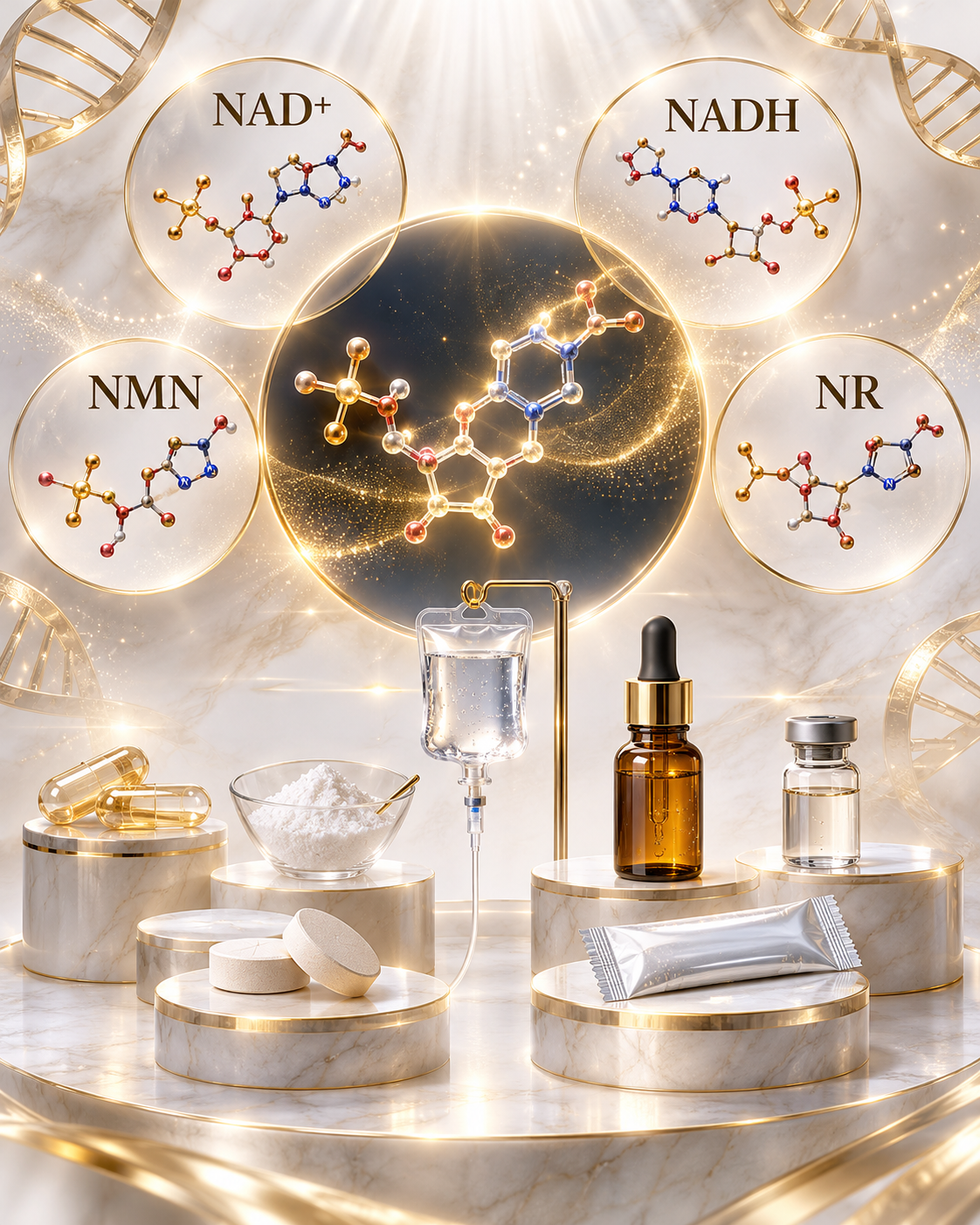
PARP is a powerful tool, but it doesn’t run on magic. It runs on NAD+ (nicotinamide adenine dinucleotide).
NAD+ is a molecule found in every cell. You might know it for its role in turning food into energy, but for PARP, NAD+ is a raw material. PARP takes the NAD+ molecule and breaks it apart to get a smaller piece called ADP-ribose.
Without enough NAD+, the PARP crew stands around the damage with no way to signal for help. This is why maintaining healthy NAD+ levels is so important for genetic health.
The Step-by-Step Repair Process
Once PARP finds a break and has enough NAD+ fuel, it follows a specific routine:
- Sensing: PARP1 or PARP2 detects the break and sticks to it.
- PARylation (The Flare): PARP uses NAD+ to build long, branching chains called Poly(ADP-ribose) or PAR. It attaches these chains to itself and nearby proteins.
- Recruitment: These PAR chains have a strong negative charge. They act like a giant, glowing neon sign that says, “FIX THIS!” This signal attracts the “heavy machinery”—proteins like XRCC1, DNA ligase, and DNA polymerase.
- The Fix: These recruited proteins step in, stitch the DNA back together, and fill in any missing pieces.
- Release: Once the job is done, the PAR chains are broken down, and PARP lets go of the DNA so the cell can go back to work.
Chromatin Remodeling: Opening the Books
DNA isn’t just floating around loosely; it is tightly wrapped around proteins called histones, like thread on a spool. This structure is called chromatin.
When DNA is damaged, it’s often buried deep inside these tight spools. PARP uses its NAD+ fuel to add PAR chains to those histones. This creates a “repelling” force that causes the spools to relax and open up. This “chromatin remodeling” makes the damaged gene accessible so the repair crew can actually reach the break.
The Competition: PARPs vs. Sirtuins
Your cell has a limited “gas tank” of NAD+. PARPs aren’t the only ones who need it. Another group of enzymes called sirtuins also uses NAD+. Sirtuins are famous for their role in longevity, “anti-aging,” and keeping your metabolism running smoothly.
When you have a lot of DNA damage (from too much sun, toxins, or poor diet), PARP goes into overdrive. It can consume up to 90% of a cell’s NAD+. This leaves almost nothing for the sirtuins. This “competition” is one reason why chronic DNA damage is linked to faster aging—the repair crew is using up all the fuel that the “longevity crew” needs to work.
When Repair Goes Wrong: NAD+ Depletion and Parthanatos
Sometimes, the damage is so bad that PARP tries too hard to fix it. If PARP stays active for too long, it completely drains the cell of NAD+.
Since NAD+ is also needed to make ATP (the cell’s primary energy currency), the cell’s power plant shuts down. This leads to a very specific type of programmed cell death called parthanatos. It’s essentially a “blackout” that causes the cell to collapse because it spent all its energy trying to fix its blueprints.
Comparison of PARP Enzymes
| Enzyme | Primary Role | Type of Damage Fixed |
|---|---|---|
| PARP1 | Main “First Responder” | Single-Strand Breaks (SSB), Double-Strand Breaks (DSB) |
| PARP2 | Backup/Partner to PARP1 | SSBs and helps with DNA gaps |
| PARP3 | Specialized Repair | Double-Strand Breaks (DSB) and Chromatin structural fixes |
| PARP-Specific Chains | Signaling & Recruitment | Acts as a “flare” to bring in repair proteins |
Frequently Asked Questions (FAQ)
How does NAD+ help fix DNA?
NAD+ acts as the fuel for PARP enzymes. PARPs break down NAD+ to create long chains (PAR) that act as signals to attract DNA repair proteins to the site of damage.
What happens if I don’t have enough NAD+?
If NAD+ levels are low, PARP enzymes cannot effectively signal for DNA repair. This can lead to an accumulation of genetic damage, which is a major driver of aging and various diseases.
Can PARP activity be harmful?
Yes. While PARP is essential for repair, overactivation (caused by massive DNA damage) can deplete the cell’s NAD+ and ATP, leading to a form of cell death called parthanatos.
What is PARylation?
PARylation is the process where PARP enzymes use NAD+ to attach Poly(ADP-ribose) chains to proteins. This creates a negative charge that recruits repair machinery and opens up the DNA structure for easier access.
Call To Action & Next Steps
Understanding the link between NAD+ and DNA repair is a game-changer for personal health. To keep your “repair crew” fueled and ready:
- Support NAD+ Levels: Explore lifestyle choices that maintain NAD+ levels, such as exercise and proper nutrition.
- Minimize Damage: Reduce exposure to UV radiation and environmental toxins that stress your PARP enzymes.
- Stay Informed: Follow the latest research on NAD+ precursors and PARP inhibitors in modern medicine.
Learn more about cellular health at:
Article Contributed By:
Website:
Keywords / Topics: dna repair mechanisms: how parps depend on nad+ to fix damaged genes, PARP1, NAD+ depletion, PARylation, cellular health, DNA damage, sirtuins, parthanatos.
References & Sources
- [1] ubiehealth.com – Understanding PARP and NAD+
- [2] nih.gov – The Role of PARP1 in DNA Repair
- [3] molbiolcell.org – Mechanisms of PARylation
- [4] biorxiv.org – NAD+ Consumption by PARPs
- [5] cshlp.org – Chromatin Remodeling and DNA Damage
- [6] wikipedia.org – Poly (ADP-ribose) polymerase
- [7] nih.gov – Parthanatos and Cell Death Pathways
- [8] researchgate.net – PARP1 and PARP2 Functional Differences



Leave a Reply