
The Mitochondrial Powerhouse™
Nicotinamide Adenine Dinucleotide (NAD+) is the fundamental coenzyme found in every living cell, acting as the essential bridge between the food we eat and the energy that keeps us alive.
Without this molecule, the complex machinery of the mitochondria would grind to a halt, leading to a total failure of cellular metabolism.
⚡ Key Takeaways
- The Energy Currency: ATP (Adenosine Triphosphate) is the “money” cells spend to function; NAD+ is the “armored truck” that delivers the raw materials to make it.
- The Redox Cycle: NAD+ constantly flips between two states (NAD+ and NADH) to transport high-energy electrons.
- Mitochondrial Health: High levels of NAD+ are linked to better DNA repair, mitochondrial biogenesis, and slower biological aging.
- The Aging Gap: NAD+ levels naturally decline as we age, which is a primary driver of decreased physical and mental energy.
Table of Contents
- The Biological Engine: An Overview
- The Mechanism of ATP Production
- Glycolysis and the Krebs Cycle
- The Electron Transport Chain (ETC)
- ATP Synthase: The Molecular Turbine
- NAD+ vs. NADH: The Redox Balance
- Why NAD+ Levels Matter for Longevity
- The Impact of Aging on Mitochondrial Output
- Frequently Asked Questions (FAQ)
- Call To Action & Next Steps
- References & Sources
The Biological Engine: An Overview
Every heartbeat, every thought, and every movement requires a constant supply of energy. This energy is produced within the mitochondria, specialized organelles often called the “powerhouse” of the cell. However, the mitochondria cannot create energy out of thin air. They require a sophisticated delivery system to move electrons from nutrients—like glucose and fats—into the energy-producing machinery.
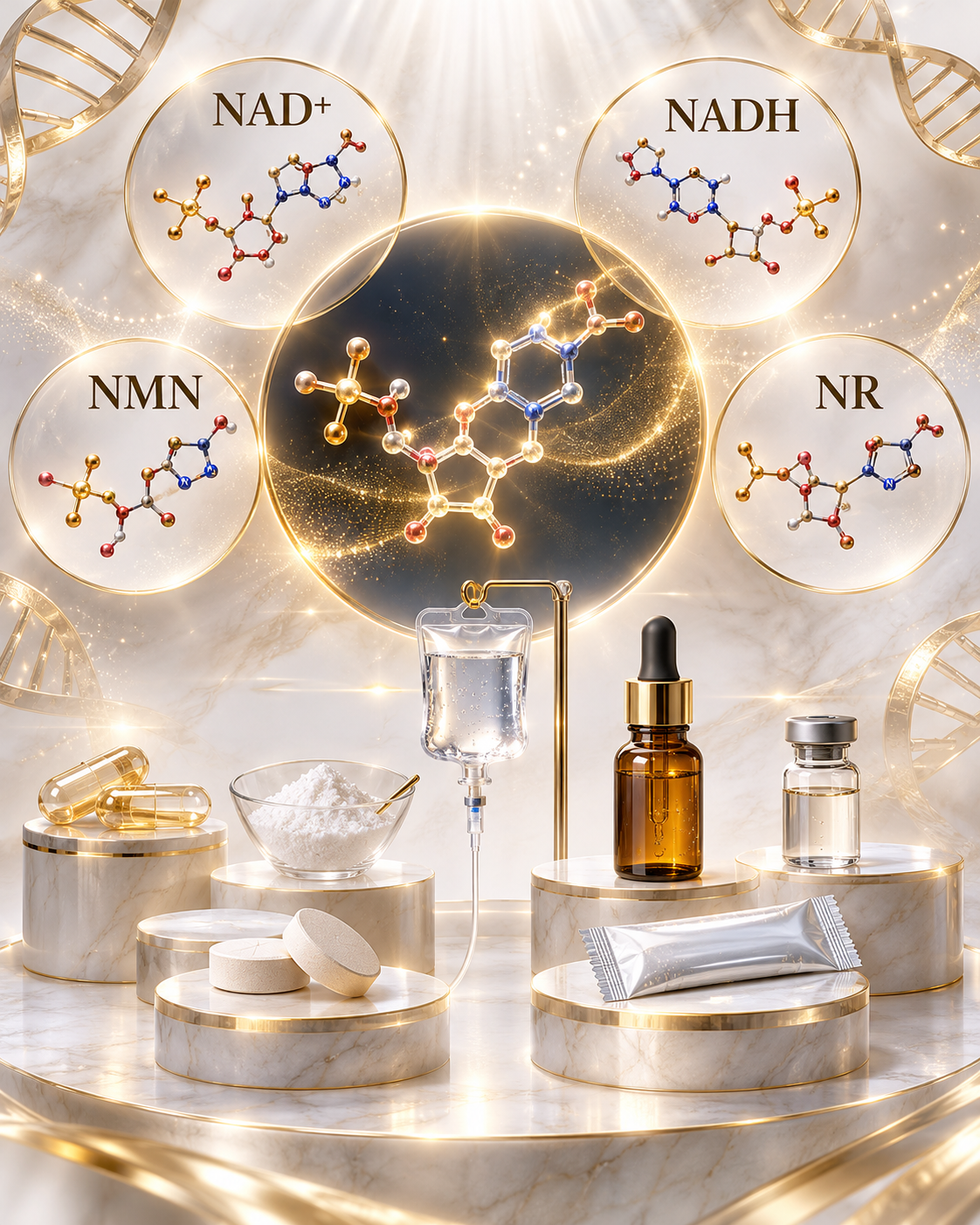
This is where Nicotinamide Adenine Dinucleotide (NAD+) comes in. It exists in two forms: NAD+ (the oxidized form) and NADH (the reduced form). Think of NAD+ as an empty bus and NADH as a bus full of high-energy passengers (electrons). By picking up and dropping off these electrons, NAD+ facilitates the chemical reactions that eventually produce Adenosine Triphosphate (ATP), the universal energy currency of life.
The Mechanism of ATP Production
The journey from a meal to a burst of energy is a multi-step process. The mitochondrial powerhouse: how nad+ drives cellular atp productionmitochondrial powerhouse: how nad+ drives cellular atp production relies on a seamless handoff of electrons through three main stages.
Glycolysis and the Krebs Cycle
The process begins in the cytoplasm and moves into the mitochondrial matrix. As the cell breaks down glucose (sugar) and lipids (fats), NAD+ acts as a “collector.” During these metabolic pathways, NAD+ accepts hydrogen ions and electrons, transforming into NADH. This step is vital because it “harvests” the potential energy stored in the chemical bonds of our food.
The Electron Transport Chain (ETC)
Once NADH is formed, it travels to the inner mitochondrial membrane. Here, it encounters the Electron Transport Chain—a series of protein complexes that act like a relay race. NADH “unloads” its electrons at the start of the chain, reverting back into NAD+ so it can go back and pick up more electrons.
As these electrons move through the complexes, they release energy. The mitochondria use this energy to pump protons (hydrogen ions) across the membrane, creating a pressurized reservoir of energy known as an electrochemical gradient.
ATP Synthase: The Molecular Turbine
The final step is a feat of biological engineering. The pressure from the proton gradient forces protons to flow back into the mitochondrial matrix through a specialized enzyme called ATP synthase.
This enzyme literally spins like a mechanical turbine. As it rotates, it captures the kinetic energy of the flowing protons to bond a third phosphate group to Adenosine Diphosphate (ADP), creating ATP. This is the “powerhouse” in action, and it is entirely dependent on the NAD+ that started the flow.
NAD+ vs. NADH: The Redox Balance
The ratio between these two forms of the molecule is a critical indicator of cellular health. A high NAD+/NADH ratio ensures that the cell has plenty of “empty buses” ready to pick up electrons and keep the metabolic fire burning.
| Feature | NAD+ (Oxidized) | NADH (Reduced) |
|---|---|---|
| Role | Electron Acceptor | Electron Donor |
| State | “Empty” / Ready to work | “Full” / Carrying energy |
| Metabolic Phase | Glycolysis & Krebs Cycle | Electron Transport Chain |
| Health Impact | High levels support repair | High levels (relative to NAD+) can signal metabolic stress |
Why NAD+ Levels Matter for Longevity
Beyond just making ATP, NAD+ serves as a signaling molecule that tells the cell how to behave. It is a required substrate for sirtuins, a family of proteins often called “longevity genes.”
Sirtuins perform several vital tasks:
- Mitochondrial Biogenesis: They signal the cell to create new, healthy mitochondria, increasing the cell’s total power output.
- DNA Repair: They help repair the genetic “blueprints” that get damaged by environmental stress.
- Circadian Rhythm Regulation: They help sync the body’s internal clock, ensuring energy is produced when we need it most.
When NAD+ levels are high, sirtuins are active, and the cell remains resilient. When NAD+ levels drop, sirtuin activity stalls, leading to a “brownout” of cellular function.
The Impact of Aging on Mitochondrial Output
Research shows that by the time we reach middle age, our NAD+ levels may have dropped by as much as 50% compared to our youth. This decline is caused by two factors: we produce less of it, and we consume more of it to fight off inflammation and DNA damage.
This depletion directly impacts the mitochondrial powerhouse: how nad+ drives cellular atp productionmitochondrial powerhouse: how nad+ drives cellular atp production. With less NAD+ available to move electrons, the Electron Transport Chain slows down. The result is lower ATP production, which manifests as:
- Persistent fatigue and low physical stamina.
- “Brain fog” or cognitive decline.
- Slower recovery from exercise or injury.
- Increased risk of metabolic disorders.
Maintaining NAD+ levels is now a primary focus of longevity science, with many looking toward precursors and lifestyle interventions to keep the mitochondrial engine running efficiently.
Frequently Asked Questions (FAQ)
What is the main role of NAD+ in the mitochondria?
NAD+ acts as a coenzyme that carries high-energy electrons from food molecules to the Electron Transport Chain. This process is essential for creating the proton gradient that drives ATP production.
Can you increase NAD+ levels naturally?
Yes. Lifestyle factors such as regular aerobic exercise, intermittent fasting, and a diet rich in vitamin B3 (niacin) can help support natural NAD+ production. High-quality sleep is also crucial for maintaining the NAD+ cycle.
What happens if NAD+ levels are too low?
Low NAD+ levels lead to mitochondrial dysfunction. This means the cell cannot produce enough ATP to meet its needs, resulting in cellular aging, decreased organ function, and fatigue.
Is NADH the same as NAD+?
They are two forms of the same molecule. NAD+ is the “empty” version ready to pick up electrons, while NADH is the “loaded” version carrying electrons to the energy-producing machinery.
Next Steps
Understanding the science of cellular energy is the first step toward optimizing your health span. To learn more about how to support your mitochondrial health and explore the latest research in NAD+ science, visit our resource center.
References & Sources
- Canto, C., & Auwerx, J. (2012). NAD+ as a signaling molecule that modulates metabolism.
- Imai, S., & Guarente, L. (2014). NAD+ and sirtuins in aging and disease.
- National Institutes of Health (NIH): The Role of NAD+ in Human Biology.
- Harvard Medical School: Understanding the NAD+ and Mitochondrial Connection.



Leave a Reply